Protect yourself and others, get vaccinated this winter. Keep reading for what you can do to manage any cold or flu symptoms at home and to see if you’re eligible for a flu or covid-19 jab this winter.
Cold and Flu
Flu is very infectious and easily spreads to other people. You’re more likely to give it to others in the first 5 days after getting infected. Flu is spread by germs from coughs and sneezes, which can live on hands and surfaces for 24 hours.
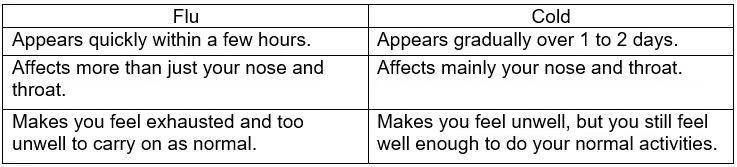
A table outlining the differences between Flu and the common cold.
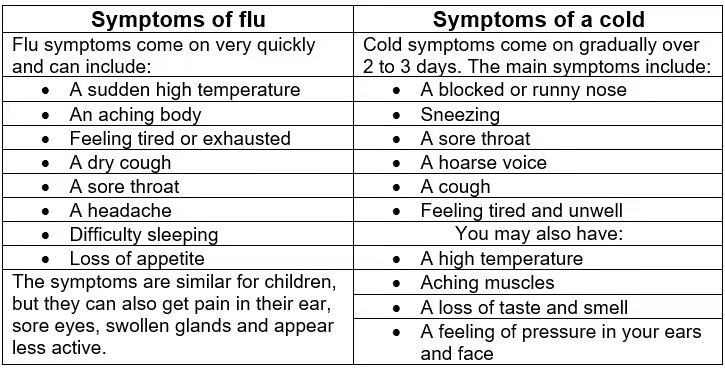
A table outlining common symptoms of Flu and a Cold.
Flu and the common cold will often get better on their own, but the flu can make some people seriously ill. It’s important to manage your symptoms, avoid spreading when possible and know when you need to seek help.
Contact the surgery, or call 111/ get help from 111 online if:
- you have a high temperature for more than 3 days
- your cold symptoms get worse, including feeling short of breath, feeling very unwell, or have chest pain
- your temperature is very high, or you feel hot, cold or shivery
- your cold symptoms do not get better after 10 days OR if your flu symptoms do not improve after 7 days
- you have a cough for more than 3 weeks
- you get cold or flu symptoms and you have a long-term medical condition (for example, diabetes, or a heart, lung or kidney condition, liver, kidneys, brain or nerves
- you get cold symptoms and you have a weakened immune system (for example, because you’re having chemotherapy or HIV)
- you’re 65 or over with flu symptoms
- you’re pregnant or have recently given birth with flu symptoms
- you’re worried about your baby’s or child’s symptoms
Remember:
- wash your hands often with warm water and soap
- cover your mouth and nose with a tissue when you cough or sneeze (if you do not have a tissue, cough or sneeze into the bend of your elbow, not into your hand)
- bin used tissues as quickly as possible
- if you are eligible, get the flu jab*
- Try to stay at home and avoid contact with other people if you have a high temperature, feel hot, cold or shivery, or do not feel well enough to do your normal activities.
Speak to a pharmacist for treatment advice, they can also recommend cold and flu remedies available over the counter. Antibiotics do not work for viral infections such as flu. GPs do not recommend antibiotics for colds or flu because they will not relieve your symptoms or speed up your recovery. Antibiotics only work if you have a bacterial infection, but colds are caused by viruses. Keep scrolling to the bottom of the page for more helpful resources.
*See below information on eligibility, please note that the flu vaccine does not prevent colds.
Flu Vaccine
Below is information regarding those who are eligible for the Autumn/Winter 2026 Flu jab.
From the 1st of September 2026, we can give the vaccine to:
- those who are pregnant
- all children aged 2 or 3 years on 31 August 2026
- children with certain long-term health conditions (aged 6 months to less than 18 years)
- all children in clinical risk groups aged from 6 months to under 18 years
Children of a school age (reception to year 11) should receive their nasal flu through their school or via the School Age Immunisation Service.
From the 1st of October 2026, we can give the vaccine to:
- everyone aged 65 years and over
- individuals aged 18 to under 65 with certain long-term health conditions
- care home residents
- carers in receipt of carer’s allowance, or those who are the main carer of an elderly or disabled person
- those living with people who are immunocompromised
- rough sleepers and those using homeless hostels or night shelters aged 16 years and over
- frontline health and social care workers without access to an employer-led occupational health scheme, including those working in:
- registered residential care or nursing homes
- domiciliary care
- voluntary managed hospices
- personal assistants employed through direct payments or personal health budgets
For more information, click here.
Covid-19 Vaccine
Below is information regarding those who are eligible for the Autumn/Winter 2025 Covid-19 vaccine.
From the 1st of October 2026, we can give the vaccine to:
- adults aged 75 years and over
- residents in care homes for older adults
- individuals who are immunosuppressed aged 6 months and over
For more information, including the full criteria of who falls under the term immunosuppressed, click here.
To book your vaccination, call the surgery or submit an online Anima request.
Helpful resources
Below is a list of helpful resources you can access to learn more about colds & flu, what you can do to look after your health and more information on winter vaccinations.
Asthma & Lungs UK – Cold weather and your lungs
Self Care Forum – The battle against cold and flu
Self Care Forum – Winter Illness and Get READY
NHS – How to treat a cold (video)
NHS Website – Winter Vaccination Information, Cold and Flu help.
UKHSA – Easy read guide – who should have the flu vaccine and why?
Childhood Vaccinations – School Age Immunisation Service
Managing with Covid-19
If you contract Covid-19 you should stay home and avoid contact with other people. You do not need to contact the GP if you are positive as most healthy people will recover at home and will able to manage the symptoms with over the counter medication. However, if you are worried about your or a child’s COVID-19 symptoms/ feel that it is getting worse, have other signs of illness (e.g. rash, loss of appetite, or feeling weak), have a high temperature that last 5 days or more or does not come down with paracetamol, please call the surgery. You can also contact 111 online, 111, or 999 in an emergency.
For more information on what to do if you have Covid-19, please see the NHS website for guidance.
Saturday Flu and Covid-19 Vaccination Clinics
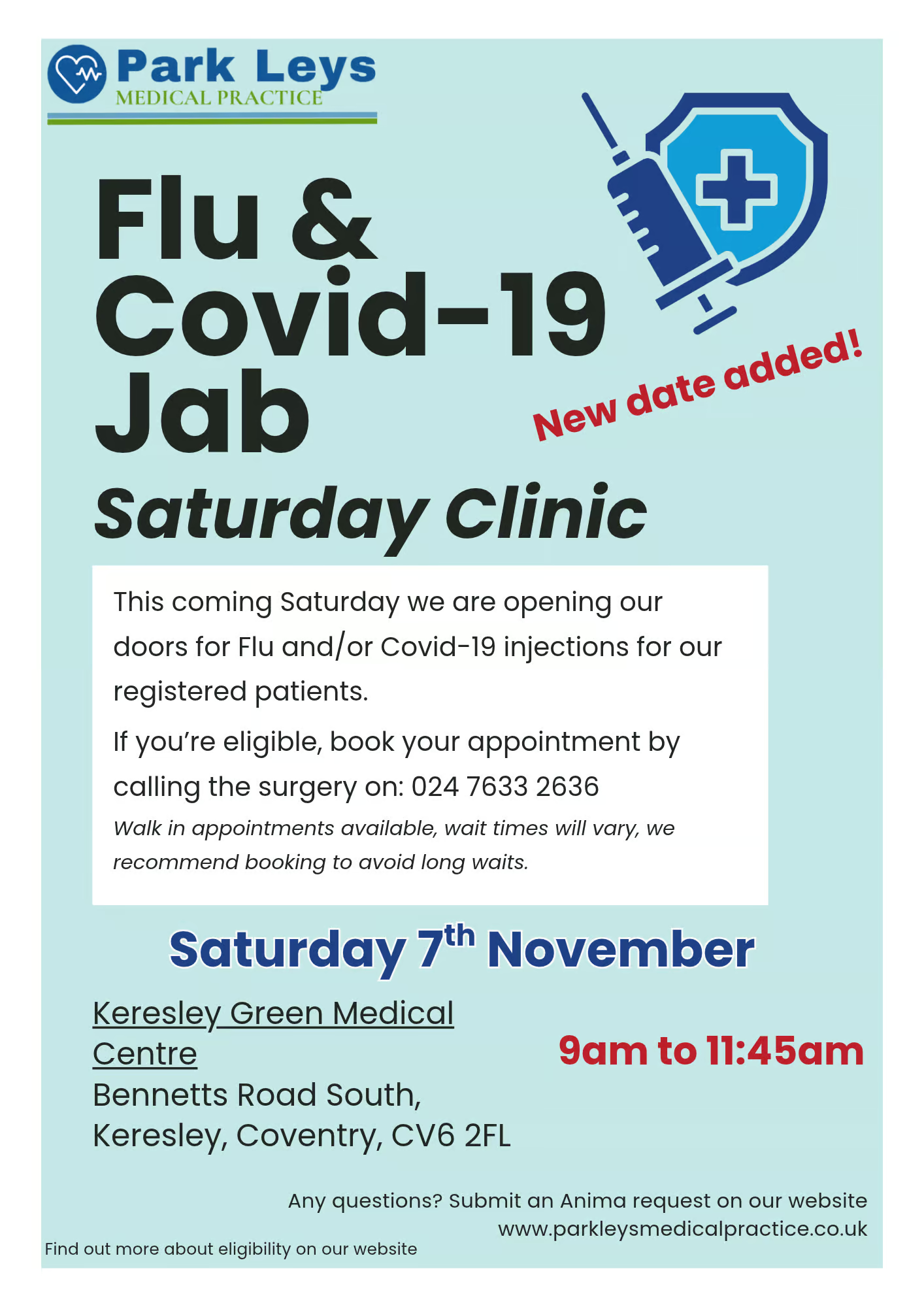
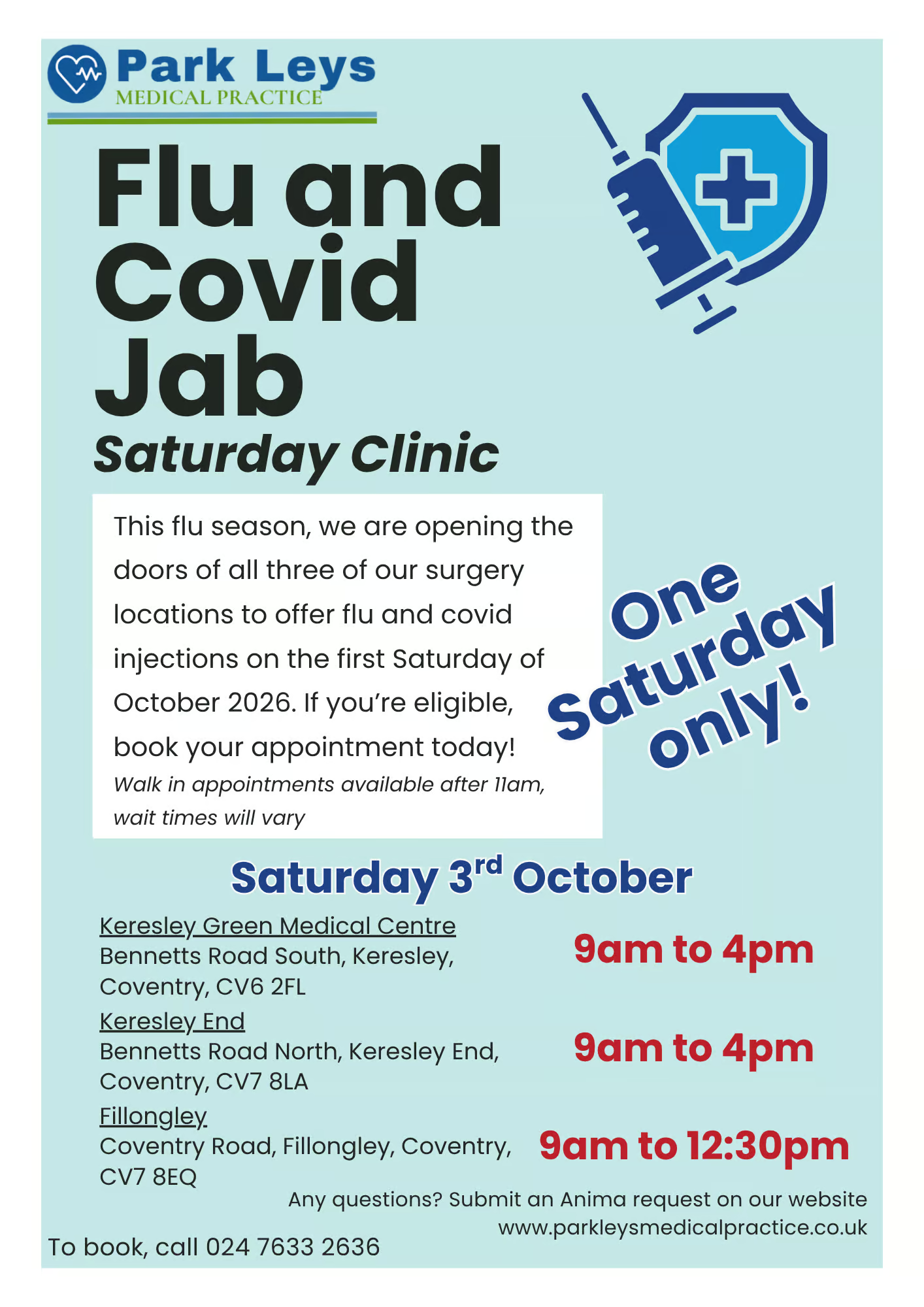
We currently do not have any more Saturday clinics planned, however our Duty Doctor is happy to give the flu vaccine on demand where possible. Simply head to our main surgery (CV6 2FL) and let the receptionist know you would like the flu jab. The receptionist will confirm if you are able to be seen at that time or you may be advised to come back at a specific time later that day.